
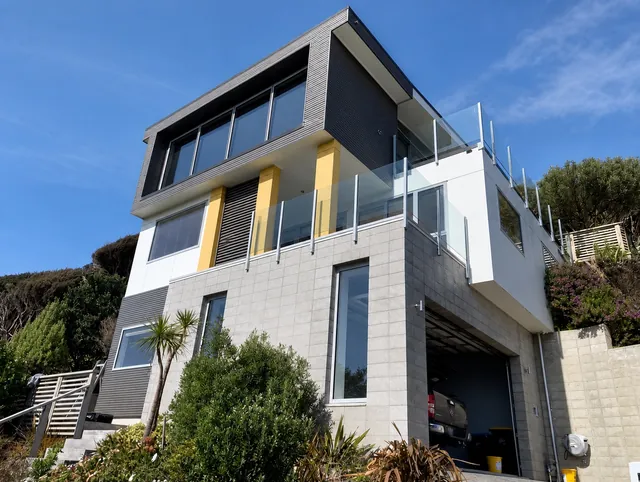
Start with the features that stay
Your roof, joinery, brick, paving and neighbouring surfaces all affect how a paint colour reads. List the colours you cannot or do not want to change before choosing the main wall colour.
Stand back from the house and look at the whole elevation, then look from the entrance and garden. A colour that suits one small wall needs to work beside the roof and windows too. Photograph these views to keep with your colour notes.
Build a simple colour schedule
| Surface | Decision to record |
|---|---|
| Main cladding | Colour name, colour code and the surface it will cover. |
| Window and door trim | Same colour, a lighter contrast or a stronger outline. |
| Fascia and other details | Which elements should stand out and which should recede. |
| Front door | Whether an accent belongs in the scheme and which product suits it. |
| Roof | Keep the existing colour or price roof work as a separate scope. |
Start with one main colour and a restrained supporting palette. You can add contrast deliberately once the broad scheme works. Write down codes as well as names so similar shades do not get mixed up.
Test samples in the light your home gets
Compare samples beside the fixed roof and joinery colours. View them in morning and afternoon light, in shade and from the street. Digital images and printed swatches are useful for shortlisting, but the final choice needs a physical sample.
- Choose a small shortlist with a clear difference between options.
- Prepare suitable sample boards with the intended colour system.
- Move the boards around the home to compare orientations and neighbouring materials.
- Record the preferred colour and check it again before confirming the schedule.
Check the colour against the surface
Darker colours absorb more solar heat. Some cladding and coating systems have colour or light-reflectance limits, so check the relevant requirements before committing to a dark scheme. Light reflectance value, or LRV, describes how much light a colour reflects; it is one part of that suitability check.
The right finish also depends on the material. Talk through the existing coating and whether the project involves weatherboards, monolithic cladding or cedar restoration. A paint scheme and a timber-stain scheme need different decisions.
Confirm colour and scope together
Mark the chosen colours on your surface list and identify anything excluded. Include access, preparation and repairs in the discussion so the scheme matches the actual work.
If changing the roof colour is part of the project, first check whether the roof is suitable for painting. For the walls and trim, our exterior painting team can discuss the surfaces and proposed scheme with you.
Your questions
Should the trim be lighter than the walls?
It can be, but it does not have to be. Test the contrast beside your fixed windows and roof, then decide which features you want to emphasise.
Can I choose from a photo alone?
Use photos to shortlist a direction, then check physical samples outdoors. Screens, lighting and neighbouring colours all affect the impression.
Bring your colour shortlist to the quote visit
Tell us which surfaces are changing and share the scheme you are considering. We will discuss the preparation and painting scope with you.
Plan your exterior repaint